Author Biography
Mastafa Foufa is a Senior Applied Scientist at Microsoft, based in Seattle. He holds eleven patents in artificial intelligence and Human-Computer Interaction, spanning intelligent personalisation, behavioural anomaly detection, live voice synthesis, and digital well-being. Trained as an engineer at Télécom Paris and holding a master's in Machine Learning from KTH Stockholm with a focus on deep learning architectures, he taught advanced NLP and large language model architectures at EPITA Paris from 2021 to 2023 before relocating to the United States.
His forthcoming book, La paresse de penser (FYP Éditions, May 2026), examines how intelligent machines are reshaping our capacity for careful thought. He is a black belt in Judo and a former two-time national champion in Karate Jutsu.
Mastafa Foufa est Scientifique Appliqué Senior chez Microsoft, basé à Seattle. Il est titulaire de onze brevets en intelligence artificielle et interaction homme-machine, couvrant la personnalisation intelligente, la détection d'anomalies comportementales, la synthèse vocale en temps réel et le bien-être numérique. Ingénieur formé à Télécom Paris et titulaire d'un master en apprentissage automatique de KTH Stockholm avec une spécialisation en architectures d'apprentissage profond, il a enseigné les architectures NLP avancées et les grands modèles de langage à l'EPITA Paris de 2021 à 2023, avant de s'installer aux États-Unis.
Son premier essai, La paresse de penser (FYP Éditions, mai 2026), explore la façon dont les machines intelligentes transforment notre capacité à penser par nous-mêmes. Il est ceinture noire de judo et deux fois champion national de karaté jutsu.
Photos (High Resolution)
Click to open full-resolution image for download.
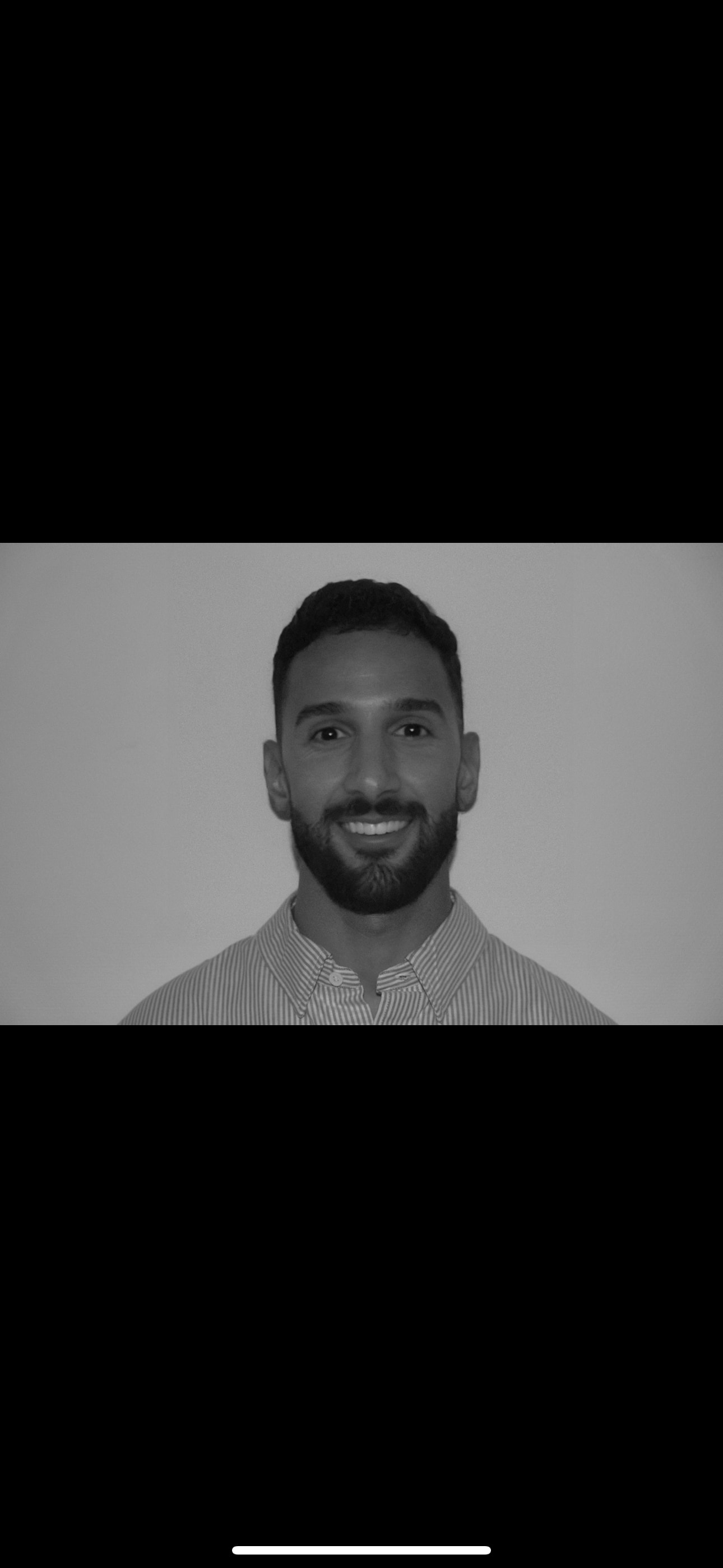
Official portrait (B&W)
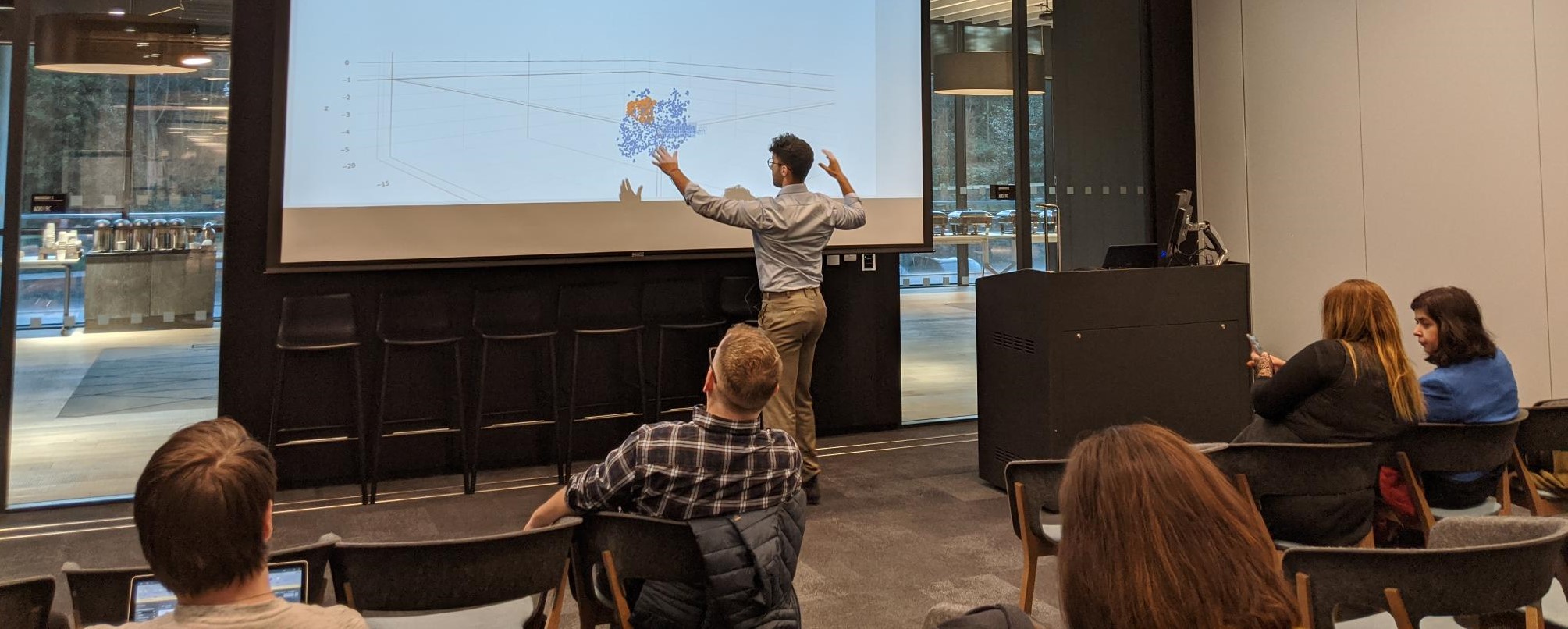
NLP & Embeddings Conference, Dublin
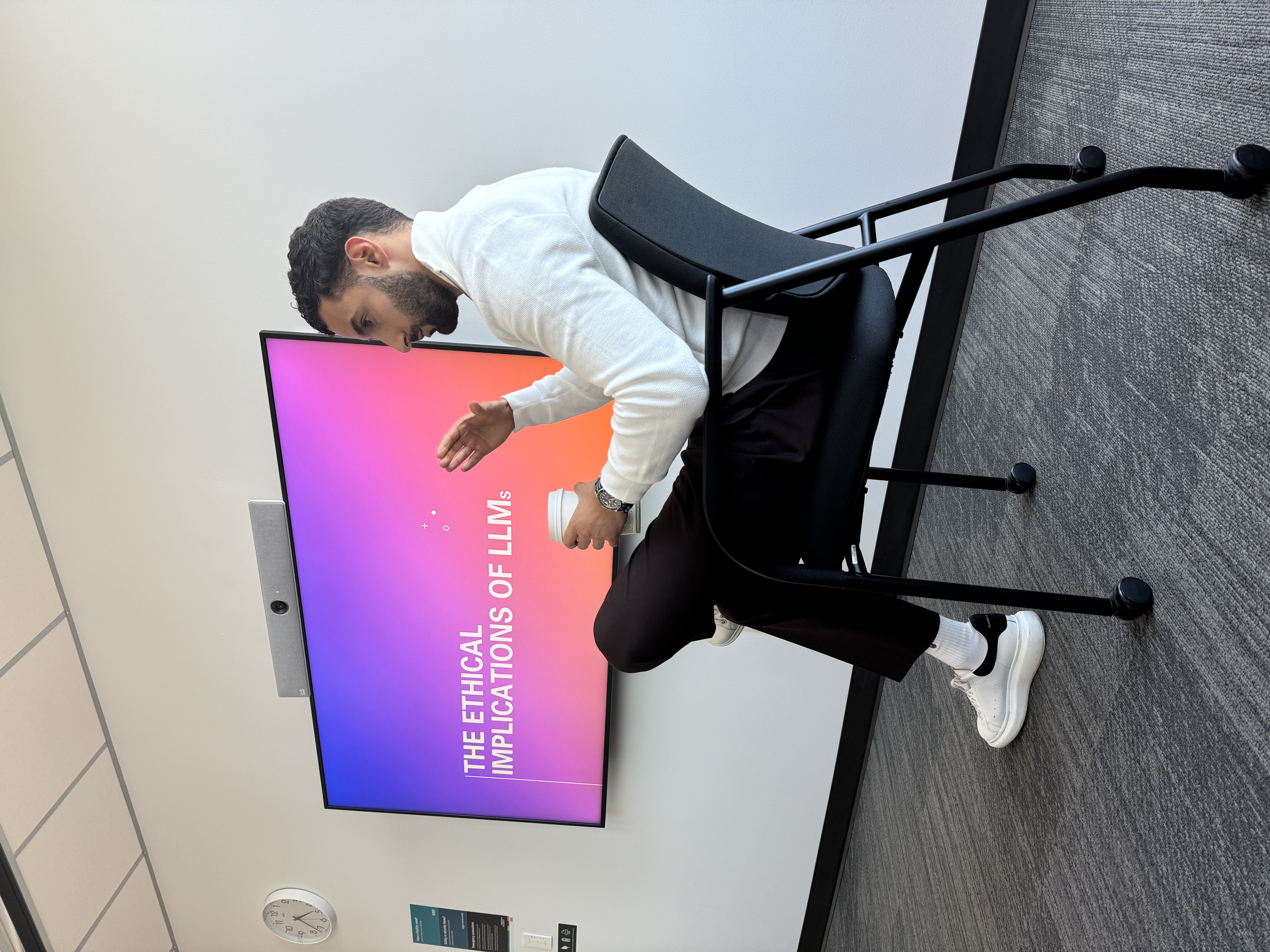
LLM Ethics & Societal Impact, Seattle
Book Synopsis — La paresse de penser
Official synopsis from FYP Éditions will appear here ahead of the May 2026 publication date.
For advance press inquiries, please contact the publisher directly or reach out via the email below.
Working description (for editorial use):
La paresse de penser examines how the proliferation of intelligent machines — AI writing assistants, recommendation algorithms, autonomous decision systems — is reshaping our relationship with our own capacity for careful thought. Drawing on nine years of engineering experience, six of them building AI systems at Microsoft, and teaching large language model architectures at EPITA Paris, Mastafa Foufa asks a deceptively simple question: at what point does "being assisted" become "being relieved of the need to think"? Written in the tradition of the French essay, this is neither a techno-pessimist manifesto nor a celebration of AI. It is an invitation to think more carefully about what we choose to stop thinking about.
Sample Q&A
You work at Microsoft and hold eleven AI patents. Why write a book that questions the technology you build?
Because being inside the system is precisely what gives me the vantage point to describe it clearly. I am not speculating about AI from the outside. I have built some of these systems. I know what they optimise for, and I know what they cannot do — which is often very different from what their users believe they can do. The concern I am raising is not about the technology being dangerous. It is about what happens to human capacities when we outsource cognitive work over a long period of time.
Who is the audience for La paresse de penser?
Anyone who uses AI tools daily and has not stopped to ask what they are exchanging for the convenience. That includes engineers, managers, students, educators, and readers who follow technology closely but want something more than product reviews or breathless predictions. The book is written in French, in the essayistic tradition — it is rigorous but accessible, and it does not assume a technical background.
What is the main argument in three sentences?
Large language models function by predicting what is most probable, not what is most true. This is also, structurally, how human heuristic thinking works. When we use AI tools to take over the cognitive shortcuts we were already prone to, we are not correcting our biases — we are outsourcing them, making them invisible, and making them harder to correct.
You are French, based in Seattle. How does that bicultural position inform the book?
The Pacific Northwest is perhaps the most optimistic place on earth about technology removing friction from life. France has a long tradition — often caricatured, but philosophically serious — of asking whether what we are optimising for is actually worth having. Sitting between these two cultures has been instructive. The American question is always "how do we make this better?" The French question is often "but is this the right thing to make better?" Both questions are necessary.
What does the title mean?
"La paresse de penser" translates literally as "the laziness of thinking." It refers to the cognitive tendency — well-documented in psychology — to favour the fast, easy, familiar answer over the slow, effortful, accurate one. The book argues that AI systems, in their current form, are extraordinarily good at making this tendency more comfortable. The title is not an accusation. It is a description of something all of us do, all of the time, that is worth noticing.
Speaking Topics
- AI and Cognitive Sovereignty — What does it mean to maintain meaningful intellectual autonomy in an environment designed to anticipate your every cognitive need?
- From the Inside: Building AI at Microsoft — A practitioner's perspective on what large-scale NLP systems actually do, where they fail, and what those failures reveal about human cognition.
- The Benchmark Problem — Why evaluating AI systems is harder than it looks, and what that means for the trust we place in them.
- The French Essay in the Age of AI — On writing philosophy for a general audience about technology — and why the essay form is the right vehicle for this moment.
- Open Source, Sovereignty, and the Geopolitics of AI — Why the distinction between API-based and open-weights AI is not technical but political, and what it means for Europe.
Press Contact
For interview requests, event invitations, and advance review copies:
mastafa.foufa@hotmail.com
For book-specific press inquiries (France), please contact FYP Éditions directly.